Foam + Fabric + Outdoor Care Guide (Australia)
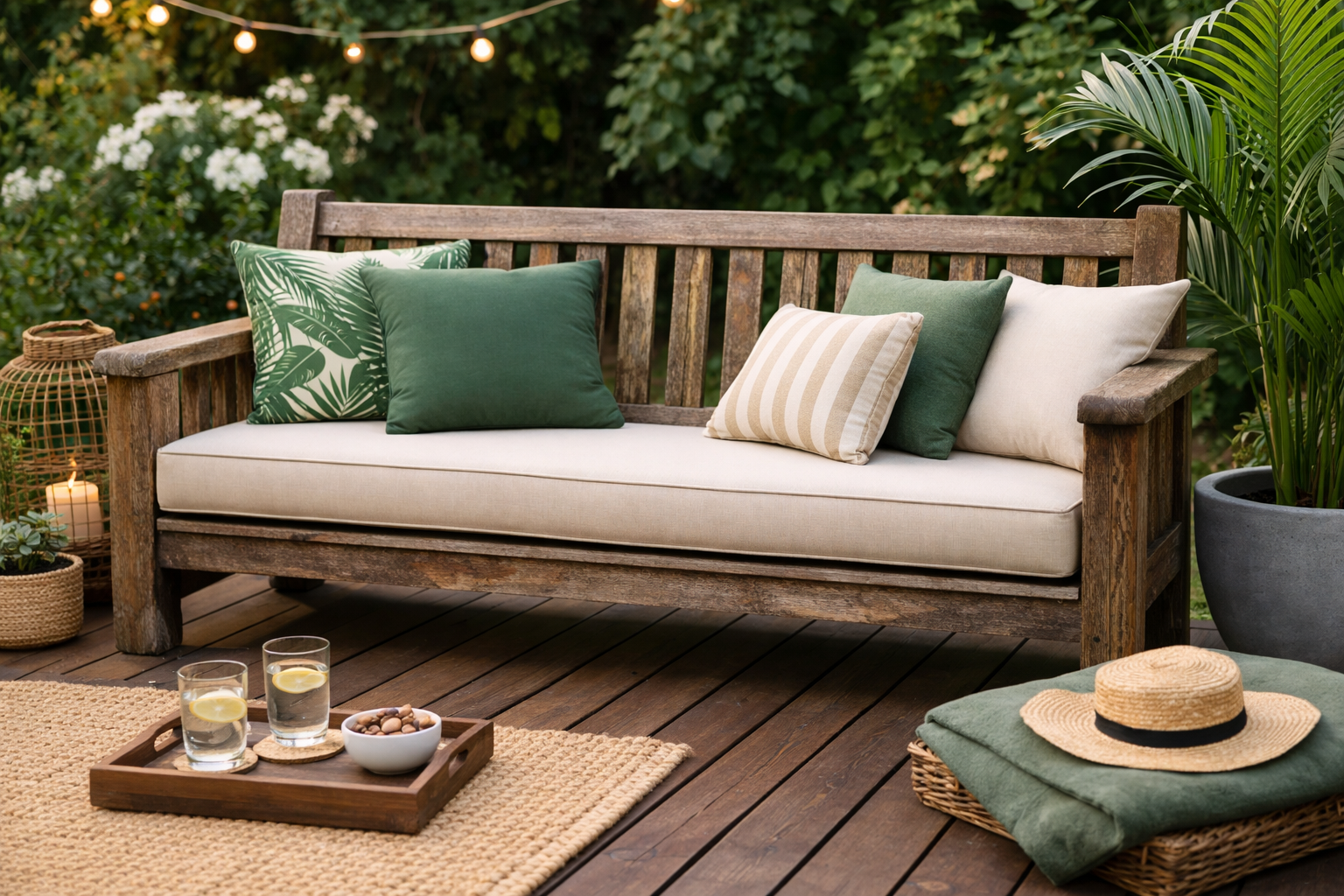
Old timber benches are beautiful, durable, and full of character — but let’s be honest… they’re not always comfortable. Whether it’s a garden bench, patio seating, dining nook, or entryway seat, adding custom foam cushions instantly transforms hard timber into a stylish, comfortable feature.
Here’s how to upgrade your bench properly using the right foam, fabric, and outdoor protection.
Step 1: Measure Your Timber Bench Correctly
Before ordering foam, accurate measurements are essential.
Measure:
- Length (left to right)
- Depth (front to back)
- Desired thickness (usually 50mm–100mm)
For most outdoor benches, 75mm–100mm high-density foam provides ideal comfort without looking bulky.
If your bench has rounded edges or unique angles, custom foam cut to size ensures a perfect fit.
Step 2: Choose the Right Foam Type
Not all foam is the same — especially outdoors.
✔ For Indoor Timber Benches:
- High-density foam (medium or firm)
- 75mm thickness for dining
- 100mm for relaxed seating
✔ For Outdoor Timber Benches:
- Reticulated (quick-dry) foam
- Designed to allow water to drain through
- Prevents mould and mildew buildup
If your bench is exposed to rain or coastal humidity (common in Australia), reticulated foam is strongly recommended.
Step 3: Selecting the Right Fabric
Foam is only half the job. Your fabric determines durability.
For outdoor use, look for:
- UV-resistant fabric
- Water-resistant material
- Mould-resistant properties
- Removable zip covers for washing
Marine-grade or outdoor upholstery fabrics work best.
Step 4: Add Batting for a Softer Finish
For a professional look:
- Wrap foam in Dacron (polyester batting)
- Softens edges
- Helps cushions fill covers properly
- Reduces fabric wrinkles
This small upgrade makes a big difference in appearance.
Step 5: Protecting Your Cushions Outdoors
Even quick-dry foam benefits from care.
Tips:
- Store cushions vertically when not in use
- Keep under cover during heavy rain
- Use waterproof cushion covers if exposed
- Clean fabric regularly to prevent mould spores
Proper care can extend foam life 5–10+ years.
Why Custom Foam Cut to Size Makes a Difference
Buying generic foam sheets often leads to:
- Poor fit
- Sagging
- Low-density material
- Short lifespan
Custom cut-to-size foam:
- Fits perfectly
- Uses proper density
- Lasts significantly longer
- Improves comfort dramatically
A simple timber bench can become a luxury outdoor seat with the right foam choice.
Final Thoughts
Upgrading an old timber bench is one of the easiest and most affordable home improvements you can make. With quality foam, durable fabric, and proper outdoor care, you’ll turn a hard wooden seat into a comfortable space the whole family actually wants to use.
Whether it’s for your patio, garden, balcony, or dining area — the right foam makes all the difference.