Upholstery foam is designed to provide comfort, support, and durability, but like any material used daily, it gradually wears down over time. Whether it’s your lounge cushions, dining chair padding, caravan seating, or outdoor furniture, knowing how long foam lasts and when it should be replaced can help maintain both comfort and appearance while preventing long-term furniture damage.
Average Lifespan of Upholstery Foam
The lifespan of upholstery foam depends largely on foam density, usage frequency, and environmental conditions:
- Low-density foam: 1–3 years
- Medium-density foam: 4–7 years
- High-density / commercial foam: 8–12+ years
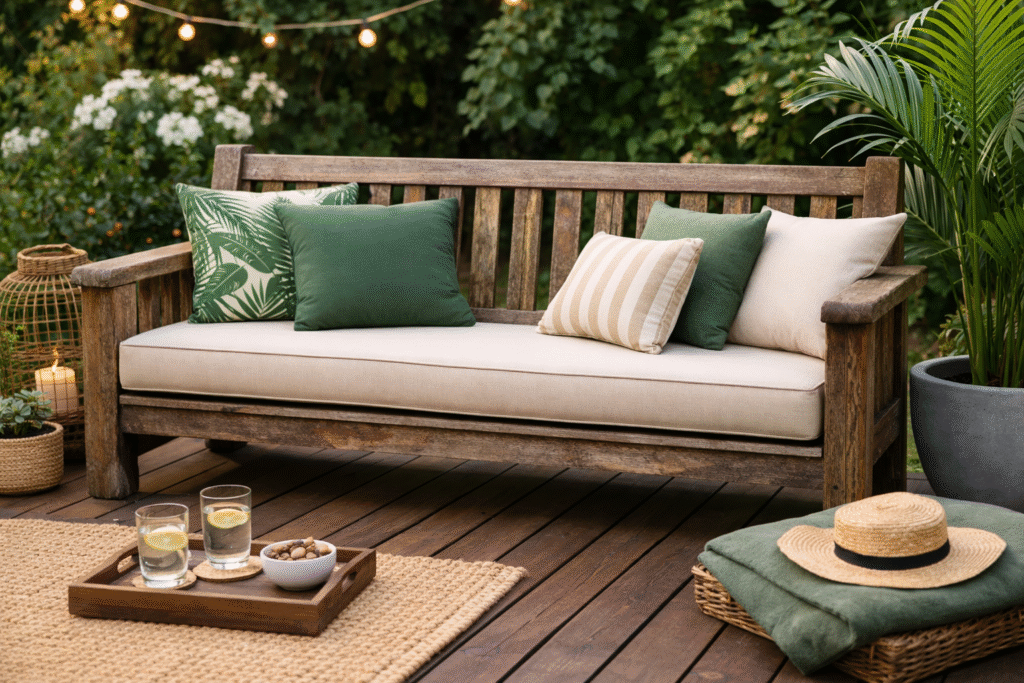
- Outdoor reticulated foam: 5–10 years depending on exposure
High-traffic seating such as family lounges, waiting rooms, and commercial seating will naturally wear faster than occasional-use furniture.
Key Signs Your Foam Needs Replacing
Many people assume their furniture is “worn out” when in reality the foam insert is the only part that needs replacement. Look for these common signs:
1. Cushions Feel Flat or Compressed
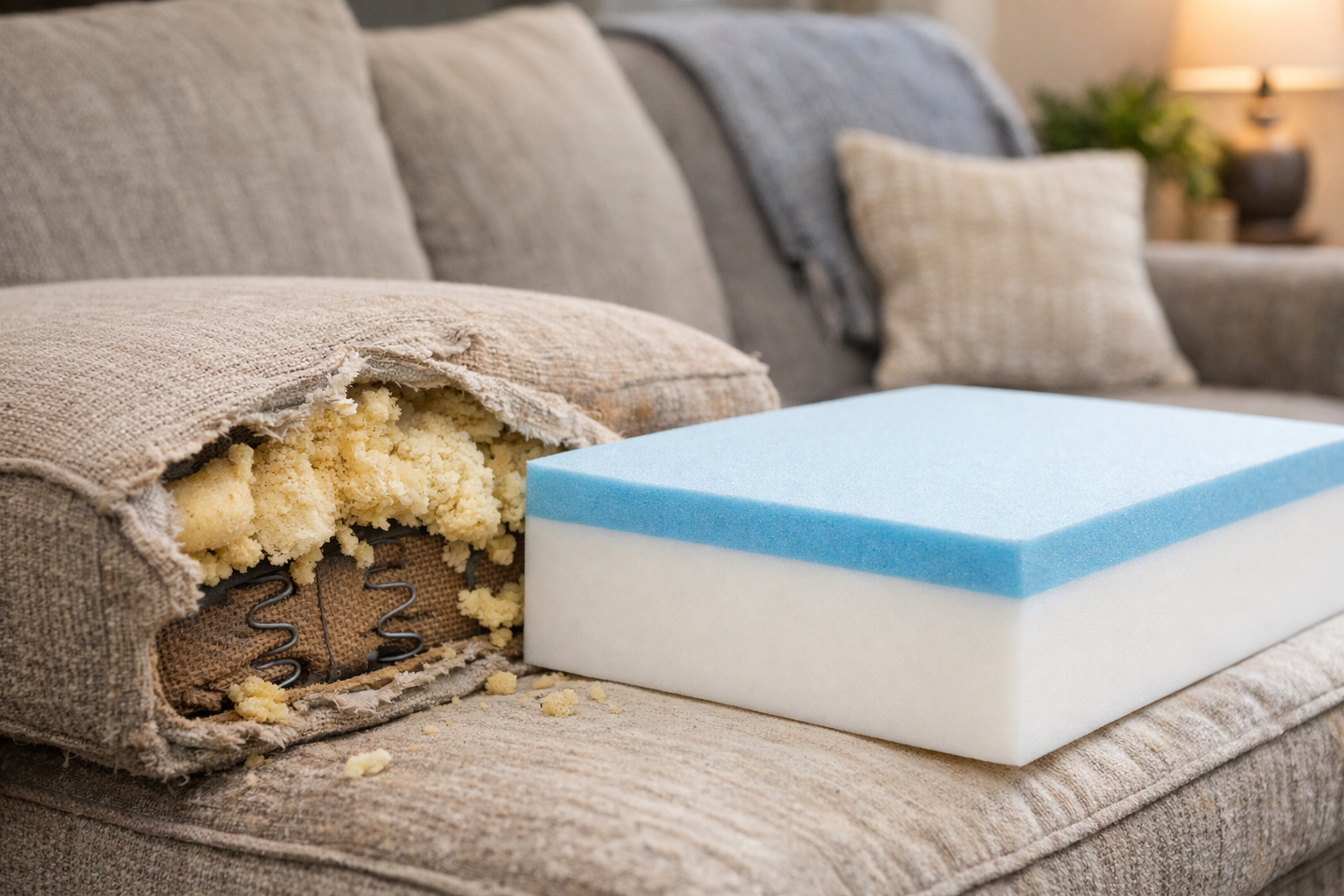
If cushions no longer bounce back after sitting, the foam’s internal cell structure has broken down. Flattened cushions provide little support and can lead to discomfort.
2. You Can Feel the Frame or Base
When foam loses density, you may begin to feel timber slats, springs, or seat bases underneath. This indicates the foam can no longer distribute weight effectively.
3. Uneven Seating or Sagging Areas
Heavily used seating areas often sag faster than others. Uneven cushions are a clear indication that the foam has deteriorated unevenly and should be replaced.
4. Increased Back or Hip Discomfort
Old foam loses its ability to provide ergonomic support. If seating suddenly feels uncomfortable, replacing the foam often restores comfort immediately.
5. Foam Crumbling or Powdering
When foam begins breaking into small particles or crumbles when removed from covers, it has reached the end of its usable life.
Why Replacing Foam Is Often Better Than Replacing Furniture
Replacing cushion foam is a cost-effective alternative to buying new furniture. In many cases:
- Cushion covers and frames are still in excellent condition
- Custom-cut foam restores the furniture to near-new comfort
- Upgrading to higher-density foam improves durability and support
- Outdoor furniture can be upgraded to weather-resistant foam for longer life
This approach saves money while reducing unnecessary waste.
How to Extend the Life of Upholstery Foam
To maximise foam lifespan:
- Rotate cushions regularly to distribute wear evenly
- Use the correct foam density for the application
- Avoid prolonged moisture exposure
- Keep outdoor cushions protected when not in use
- Replace covers if they allow water to soak into the foam
Choosing quality, correctly specified foam from the start is the single biggest factor in determining how long upholstery foam lasts.
Restore Comfort Without Replacing Furniture
If your cushions feel flat, sagging, or uncomfortable, replacing the foam inserts is one of the fastest and most affordable ways to refresh your furniture. Custom cut-to-size foam ensures a perfect fit, improved comfort, and long-lasting performance — often making furniture feel brand new again.